ESKADRA “B” Foundation named after Capt. Ludwik Paszkiewicz
The foundation’s patron, Capt. Ludwik Witold Paszkiewicz, was a fighter pilot of No. 303 Polish Squadron and one of the Polish airmen who fought in the Battle of Britain.
About the foundation
The ESKADRA “B” Foundation named after Capt. Ludwik Paszkiewicz was established on 5 February 2025 at the Museum of Military Technology and Air Defence in Busko-Zdrój.
Its patron was the first pilot of No. 303 Squadron to shoot down an enemy aircraft during the Battle of Britain. His biography is presented below.
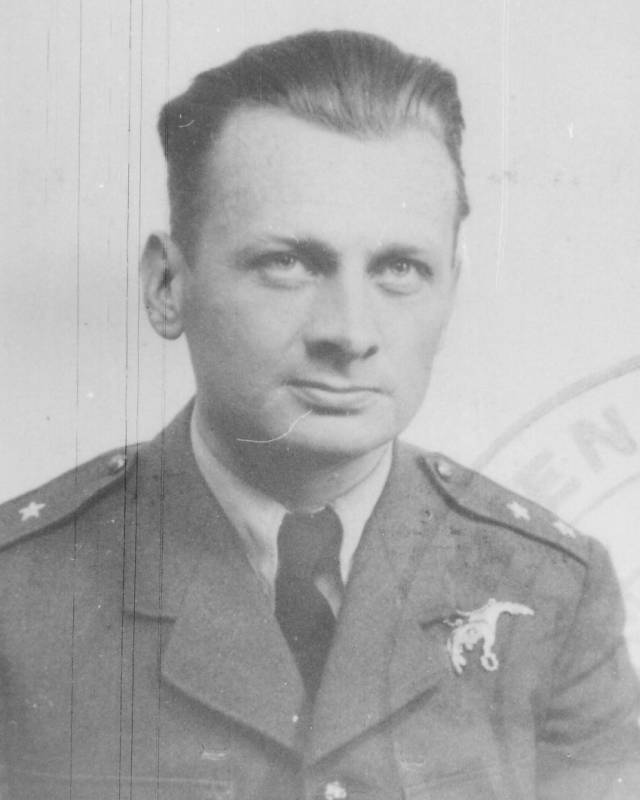
Capt. Ludwik Witold Paszkiewicz (1907-1940)
He was born on 21 October 1907 in Wola Gałęzowska, the son of Ludwik and Janina née Horciak (Horczak, Hurko coat of arms). He had a sister, Zofia, and two brothers, Stanisław and Mieczysław. He attended a secondary school with a maths and science profile in Lublin. After his final exams he studied at the Warsaw University of Technology and then at the Lwów University of Technology.
During his military service, after a reserve officer cadet course in Mołodeczno, he decided in 1931-1932 to join the air force. He graduated from the Air Force Cadet School second in the 8th intake. On 15 October 1934 he was commissioned as a second lieutenant and posted to the 112th Fighter Escadrille. In 1937 he was promoted to lieutenant and married Maria Piwnicka. In 1939 he became commander of the escadrille.
The French campaign
In August 1939 he travelled to France with a Polish military mission to buy aircraft for the Polish air force. By an order of 18 May 1940 a front-line flight was formed under his command, with Cpl. Leon Nowak and Cpl. Kazimierz Wünsche. The flight was assigned to the French unit GC II/8. After many difficulties the Poles found it at Villacoublay and were attached to its 4th escadrille. They began flying on 23 May, and on 13 June the unit moved to Cherbourg.
On 18 June, while flying to Rochefort, the pilots were ordered to attack a German column. Only Paszkiewicz carried out the order. During the French campaign he flew 33 sorties (28 hours 40 minutes), 18 of them combat missions. He was evacuated from the port of La Rochelle aboard the Robur III and reached Britain on 21 June.
No. 303 Squadron and the Battle of Britain
After a stay in Blackpool, on 2 August he was posted to No. 303 Fighter Squadron. On 31 August, during a training flight, he broke away from the formation and shot down a German Dornier Do 17 (according to J.B. Cynk it was a Messerschmitt Me 110). On 7 September he shot down two Dornier Do 17s, on 11 September he claimed a Messerschmitt Me 110 destroyed, and four days later he downed a Messerschmitt Me 109. On 26 September he shot down a Heinkel He 111.
On 27 September 1940 he was shot down and killed in his Hurricane L1696, which crashed at Crowhurst Farm. He was buried on 2 October at Northwood Cemetery. He was posthumously awarded the Silver Cross of the Virtuti Militari (23 December 1940), the Cross of Valour (1 February 1942) and the British Distinguished Flying Cross.
In 1941 his daughter died in Poland. His wife, Maria née Piwnicka, took part in the Warsaw Uprising and after the war joined the Sisters of the Immaculate Conception.
Sources (in Polish): “Wykaz poległych i zmarłych żołnierzy PSZ na obczyźnie”; “Księga lotników polskich”, O. Cumft, H.K. Kujawa; “Ku czci”, collective work; “Polskie Siły Powietrzne”, T.J. and A. Krzystek.
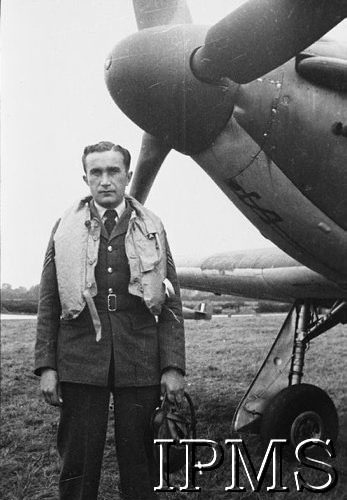
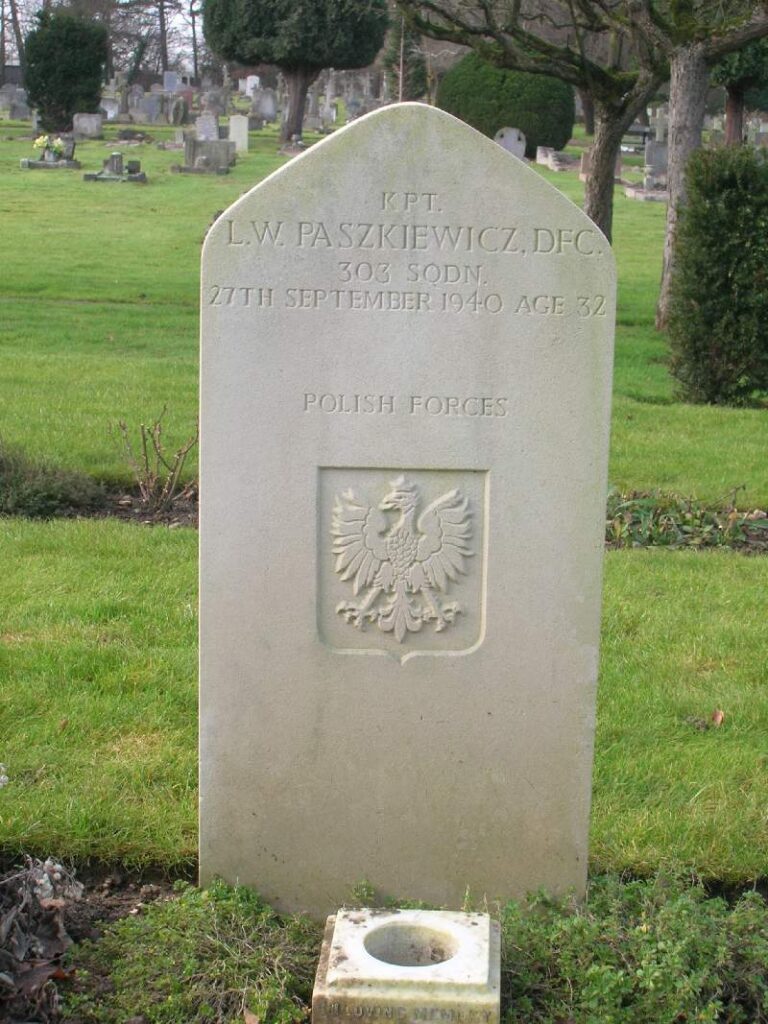
In archive photographs
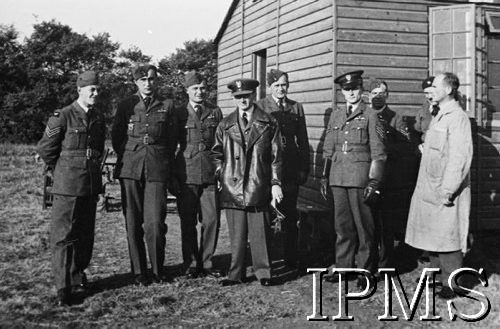
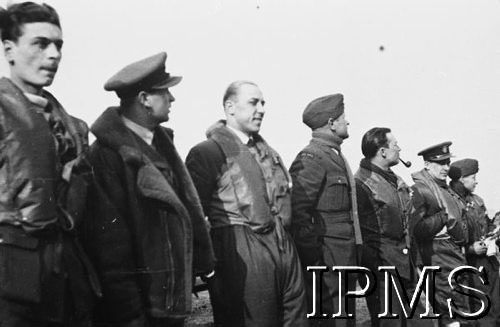
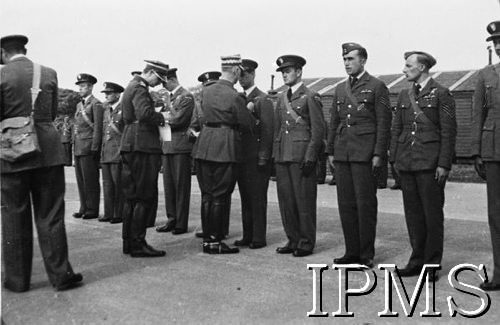
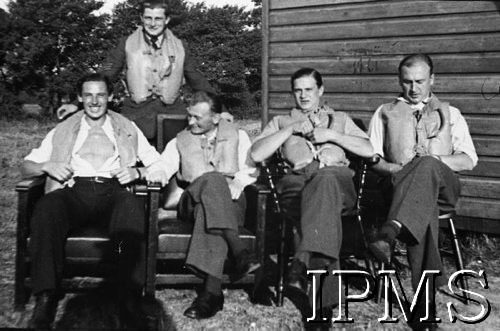
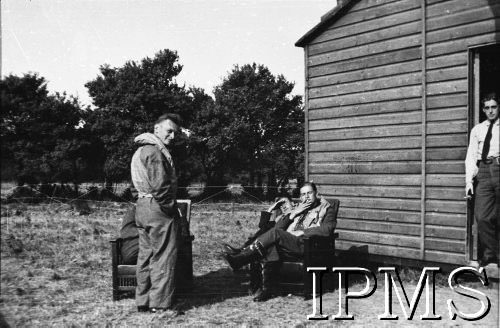
Archive photographs: collection of the Polish Institute and Sikorski Museum, London.
Visit the museum in Busko-Zdrój
Memorabilia of Polish military aviation can be seen at the museum’s exhibition at ul. Stefana Żeromskiego 24.